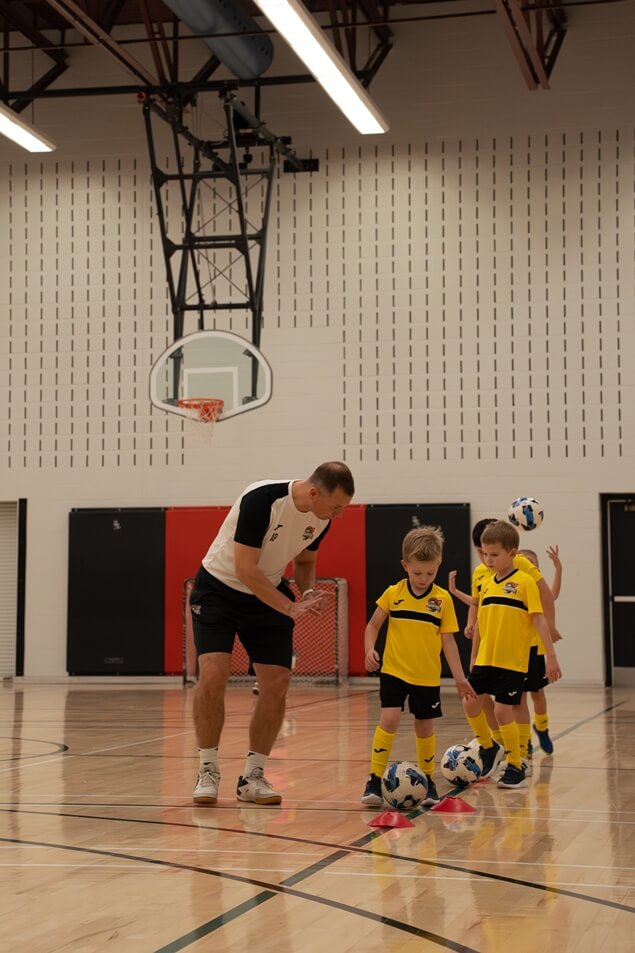


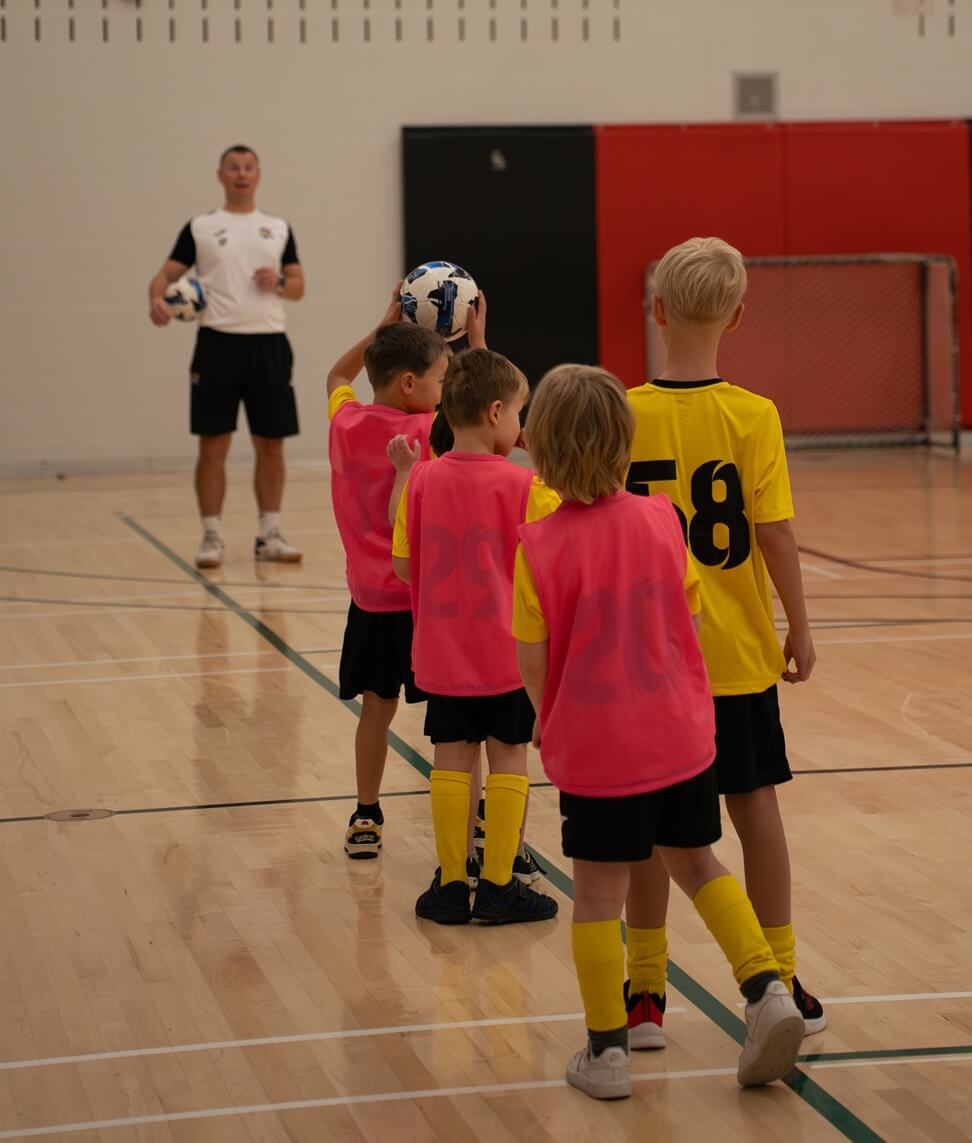
✅ 1. Football develops the whole body — not just one ability
Unlike highly specialized sports, football provides comprehensive physical development. During one session, a child develops:
• coordination
• balance
• speed
• agility
• endurance
• spatial awareness
🧠 This is a multisensory load: vision + movement + decision-making + emotions.
Such a combination is especially effective for brain development at an early age.
⸻
✅ 2. Football aligns perfectly with sensitive developmental periods
At different ages:
• 3–6 years — peak development of coordination and balance
• 6–9 years — sensitive period for speed and motor skills
Football naturally:
• repeats fundamental movement patterns,
• requires quick reactions,
• constantly adapts to changing situations.
📌 As a result, the child’s nervous system develops most efficiently during these years, provided the training methodology is age-appropriate.
⸻
✅ 3. Football develops thinking through movement
In football, a child constantly:
• chooses direction,
• evaluates space,
• makes decisions,
• learns to anticipate.
This develops:
• attention,
• memory,
• processing speed,
• self-control.
🧠 Football is thinking in motion, adapted to a child’s level of development.
⸻
✅ 4. Football is a powerful tool for social development
Football naturally teaches children to:
• interact with others,
• cooperate and communicate,
• cope with losing,
• celebrate teammates’ success,
• take responsibility.
These are essential life skills formed through experience, not explanation.
⸻
✅ 5. Football builds confidence and healthy self-esteem
When a child:
• learns to control the ball,
• successfully dribbles,
• scores their first goal,
the brain forms a stable connection:
“I can — I succeed — I’m not afraid to try.”
This directly supports:
• confidence,
• initiative,
• motivation to learn in general.
⸻
✅ 6. Football is one of the most accessible sports
To get started, a child needs only:
• a ball,
• some space,
• and motivation.
No complex equipment is required.
The child can continue playing at home, at school, indoors, or outdoors — making movement a natural part of daily life.
⸻
🔑 Key takeaway
Football is more than just a sport.
It is a universal platform for child development, combining:
body + thinking + character + social skills.
That is why football is such a strong choice for children aged 3–9, when training is structured correctly and without overload.