

Abstract
This article explores the methodological foundations for improving the effectiveness of attacking actions inside the penalty area. Based on observational and analytical data, the text highlights the patterns of scoring in football, the constraints influencing decision‑making in the penalty area, and practical recommendations for training young players using small‑sided, high‑intensity exercises with reduced pitch dimensions.
Introduction
One of the consistent patterns in football is that the majority of goals—approximately 85%—are scored from inside the penalty area. Even among elite teams, including national squads and top‑level professional clubs, only about 40% of shots taken from the penalty area end up on target. This indicates that even the best players in the world have significant room for improvement in terms of precision, timing, and decision‑making under pressure.
Players are required to act extremely quickly in the penalty area due to limited time and space, as well as the constant physical pressure from defenders. These constraints shape specific technical and tactical demands that must be accounted for when designing training programs, especially for developing players.
Key Observations and Statistics
Among all goals scored inside the penalty area (excluding penalties), the distribution is approximately as follows:
• Almost 20% of goals are scored while the player is falling.
• Two-thirds of goals come from tight or unfavorable angles.
• More than 10% of goals result from rebounds.
• About 40% are scored by striking a ball that is already moving.
• A portion of goals are scored with the first touch while the player is on the move.
• More than 20% of goals are scored with the head.
These conditions in competitive matches differ significantly from typical training environments, making it necessary to recreate realistic pressure and variability in practice.
Training Methodology for Penalty‑Area Actions
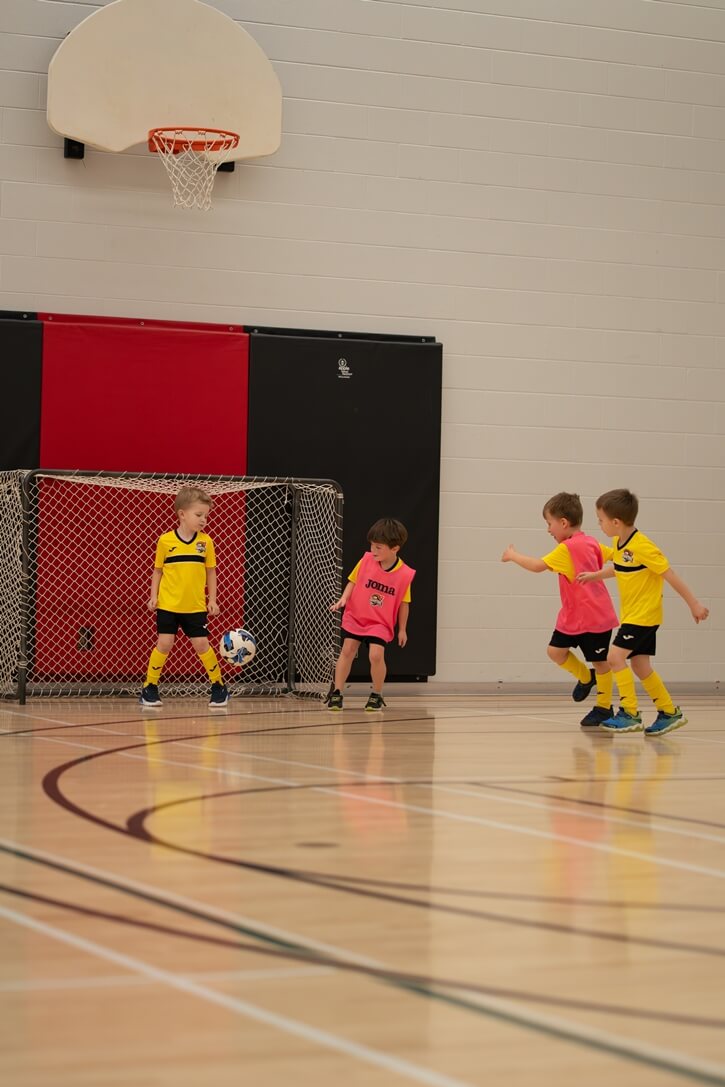
To increase the effectiveness of attacking actions in the penalty area, players must frequently rehearse match‑like scenarios involving restricted space, pressure, speed, and unpredictability. One of the most effective approaches is using small‑sided games with reduced goals and limited numbers of field players.
These exercises allow advanced players to refine finishing under pressure, while younger players develop the technical foundation for quick ball‑striking, anticipation, and spatial awareness.
Goalkeeper Development
Goalkeepers particularly benefit from small‑goal exercises, as they face a greater number of realistic shots and match‑specific scenarios. Such training enhances essential skills, including reaction speed, anticipation, footwork, reading the attacker’s body, and understanding shot trajectories.
Application to Smart Goal Academy Methodology
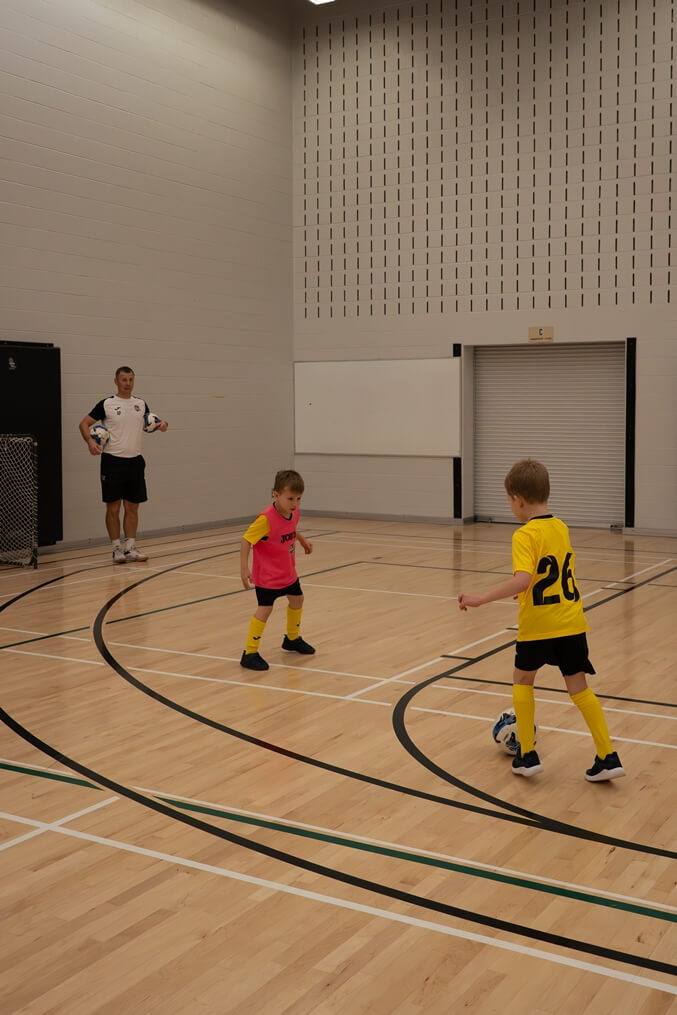
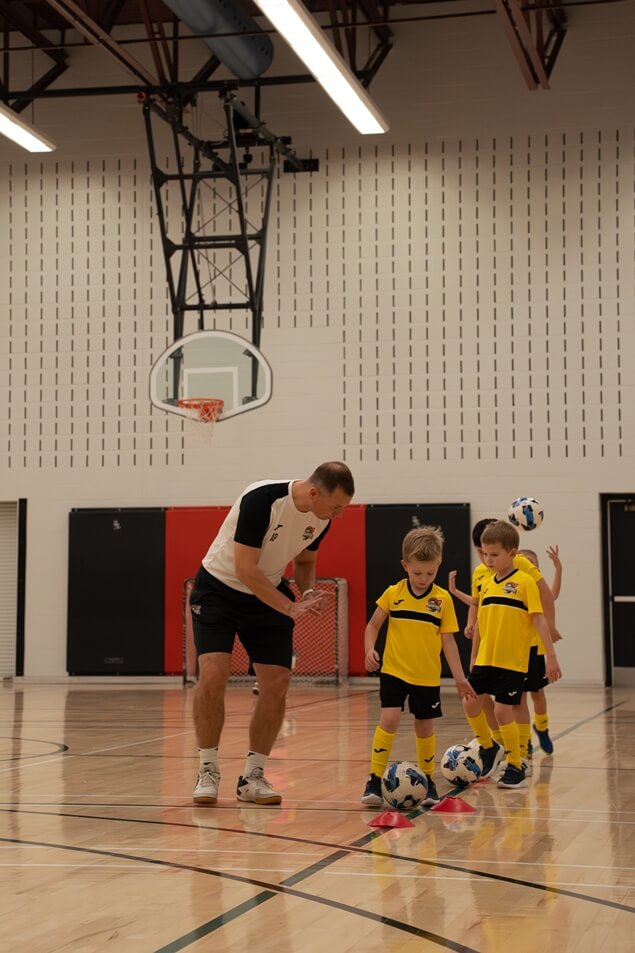
Within Smart Goal Academy’s curriculum for ages 5–6, elements of this methodology are adapted in a simplified form. Young players work on developing quick reactions, first‑touch coordination, orientation in tight spaces, and basic finishing skills. Small‑sided directional games, movement patterns, and ball‑striking exercises prepare children for more advanced finishing work in later stages of the Academy pathway.
Conclusion
Training finishing actions inside the penalty area requires recreating real‑match conditions: limited time and space, defender pressure, and dynamic, unpredictable ball situations. Effective training involves small‑sided games, reduced playing areas, and scenario‑based drills that challenge both attackers and goalkeepers. These principles form an important part of long‑term player development and are integrated into the Smart Goal Academy system from the earliest stages.